Back to South Africa

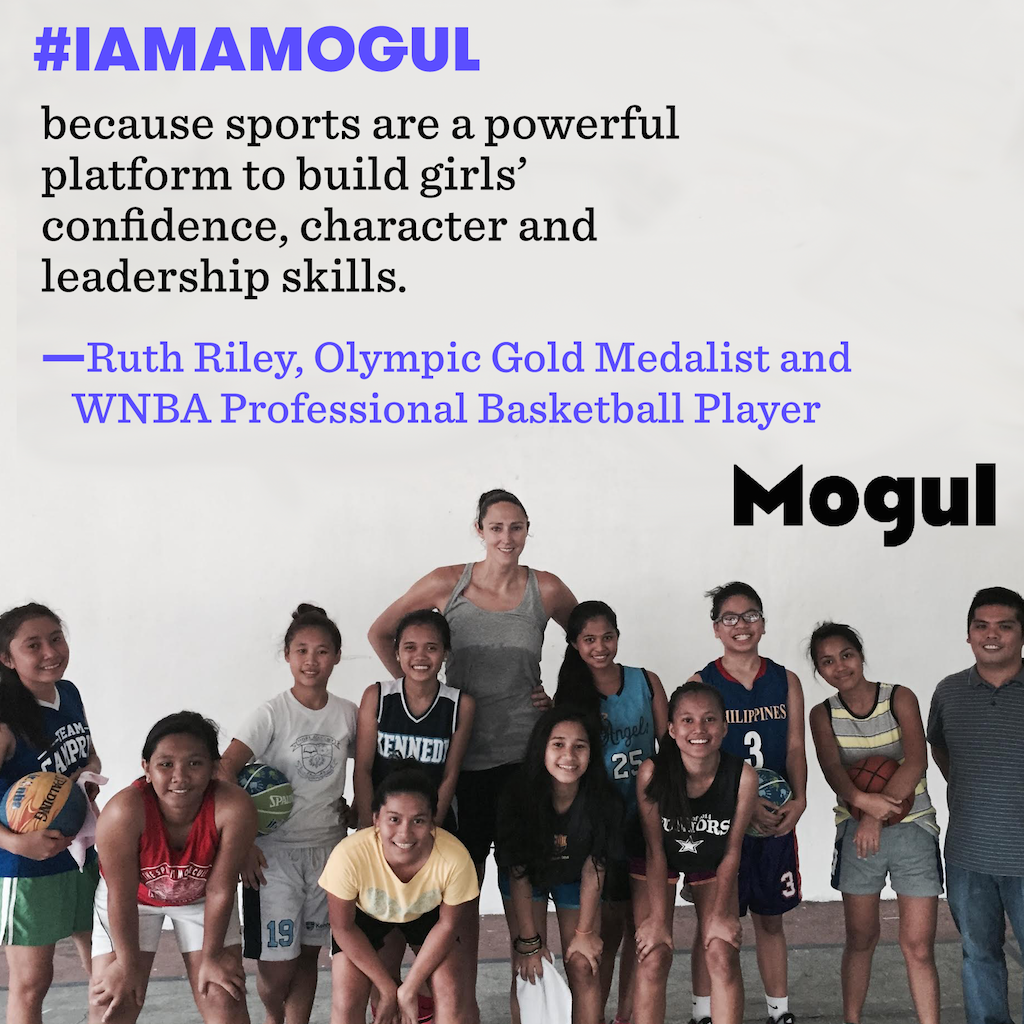
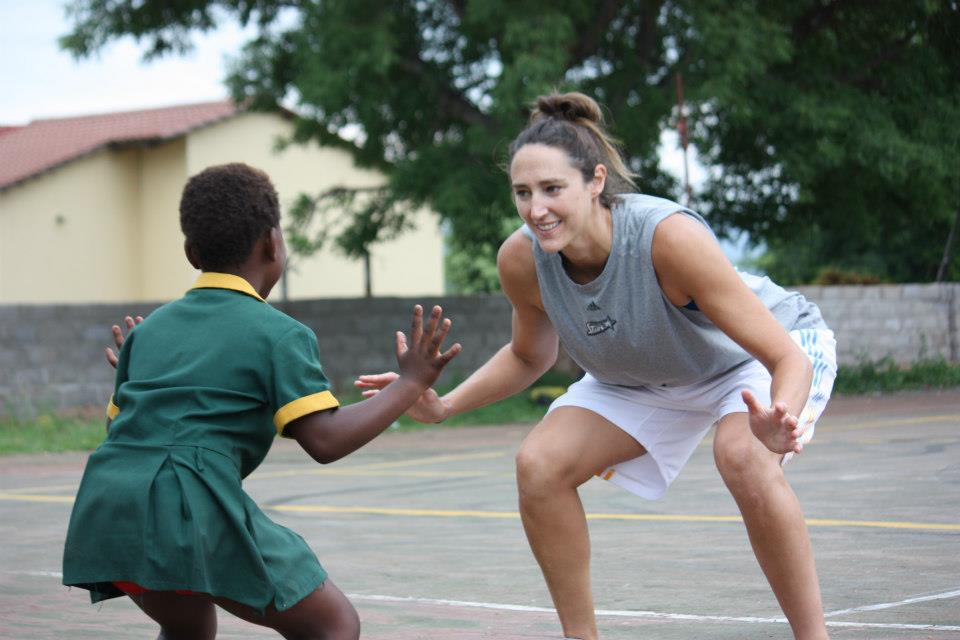
At first glance, my height, skin color, and even my accent screams a foreigner has come to the Nkomazi region of South Africa near the Swaziland border—yet my 4th trip back to this area ensures that I am not greeted as another Umfati Wemlungu (white woman), but rather I am embraced as a coach, sister and friend. This last installment of my African blog is about the most fulfilling part of my trip. Traveling to this remote region in 2006 helped ignite the passion for my humanitarian work. It was then that I learned about all the multi-faceted challenges that my friends faced every day of their lives because they were born in a place where the unemployment rates, HIV prevalence, and poverty levels rank amongst the highest in the world.

When involved in any grassroots effort the key to success is sustainability. I remember coming home from the first trip feeling an enormous ache in my heart to help, coupled with this sense of overwhelming inadequacy of not knowing where to begin. I knew I could not solve their problems myself, but what I could do was be a consistent force helping them move in the right direction. One of the most glaring needs I recognized was that there was a complete void of leadership within their community. Everyone was in survival mode, and therefore they were completely focused on how they personally were going to make it to tomorrow, with little forethought as to how to create a better future. Without someone to inspire and guide them in a different direction, the community was stuck in this hopeless cycle of desperation.

Now I want to introduce you to three amazing young men: Zola, Sabelo, and Scratch. Known as some of the best basketball players in the region, they were participants in my first ever skills camp over six years ago. As some of the older players in the area, they were required to perform the dual duty of coaching and playing. Zola has recently decided to sacrifice his love for playing and in turn spends all of his time investing in the younger generations. He (with the help of his friends) are organizing thirteen and under teams for both girls and boys at the local elementary schools. They spend every afternoon teaching them not only basketball, but most importantly life skills. These men are putting Gandhi’s words to action as they are trying to “be the change they wished to see in their communities.” This time my flight home invoked a few different emotions than my first trip. Yes, I was once again extremely passionate about doing what I can to help, but instead of being overwhelmed by the complex problems, I had a sense of hope. For the first time, this community has young men who are willing to lead, and that is the initial step of making progress sustainable!!

Here is a video of the work we were doing!

Basketball in Panama!

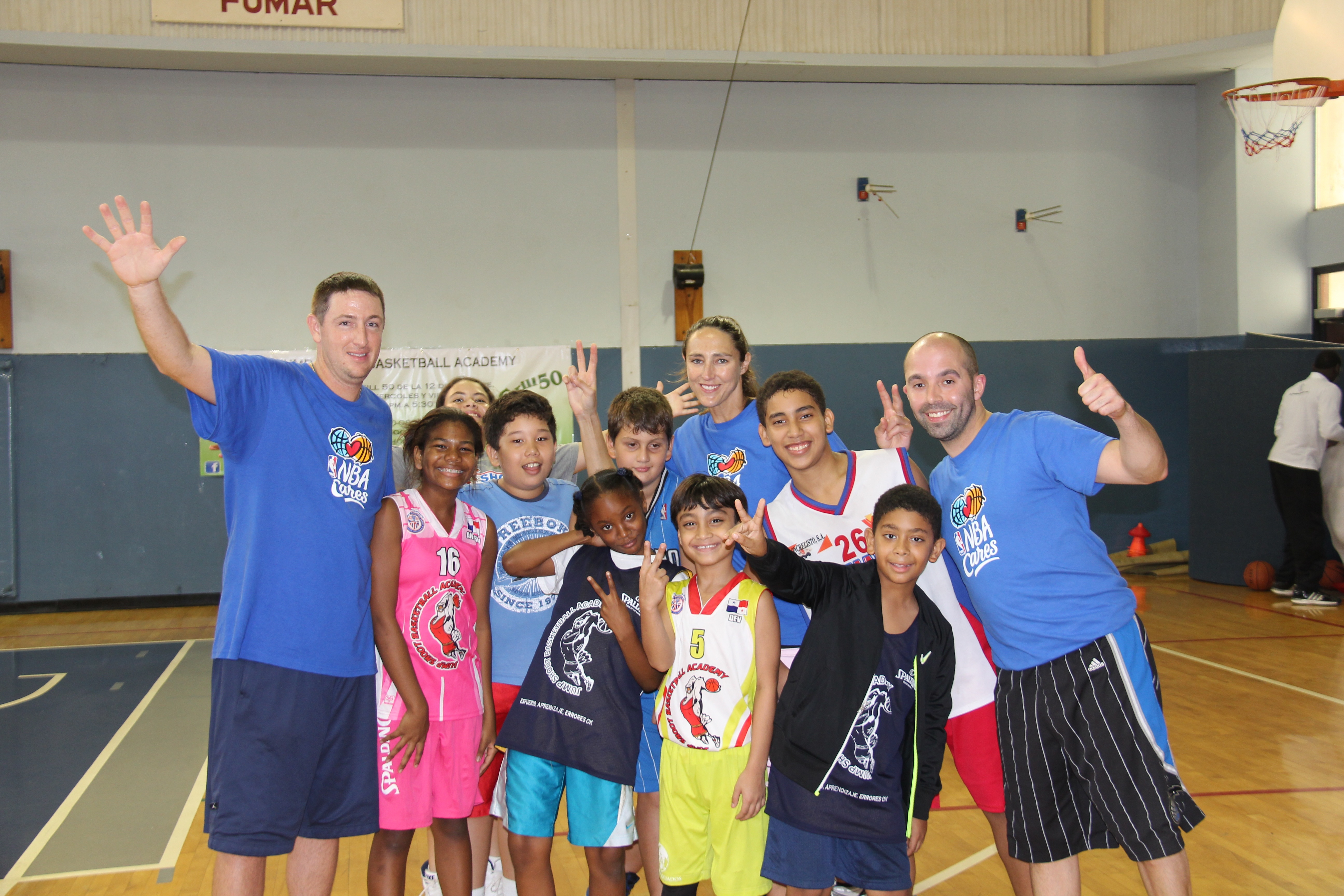
Each year I am amazed at the places I travel to, the people I meet, and the experiences I have all due to a little orange ball. Panama is now the newest stamp in my passport as I have had the opportunity to spend this past week there working along side two of the NBA’s best camp instructors, Donnie Arey and Antonio Perez with the Orlando Magic. Jump Shoot Basketball Academy was started in 2004 by two brothers, Luis and Victor Julio, who possessed an equal love for the game of basketball and vision for helping develop the sport in their native country. With this dream in mind, they started their own basketball academy and have spent the last 8 years teaching the fundamentals, developing coaches, and creating teams to compete in various national and international competitions.

The differences in the camp were evident at first glance, as the gym was filled with girls and boys from 6-17 years old, of various nationalities and skill levels. The similarities were equally evident though, as they were all hard workers who were very eager to learn!! The focus of this week of camp was to teach drills that were both challenging and fun and that would develop both foundational skills and a love for the game!! Donnie, Antonio, and I not only spent the week teaching the 100 plus kids that enrolled in our camp we also had the opportunity to work along side the Jump Shoot Academy coaches, passing on knowledge so that they are better equipped to instruct the kids the rest of the year.

My travels have always provided me with a first-hand history lesson, so it was only fitting that the first place I visited was the Mira Flores Panama Canal. The United States helped construct this amazing engineering waterway system in 1914, making it a lot faster to transport materials and goods between the Atlantic and Pacific Oceans. After an incredible private tour, where we were able to walk over the locks, we had the chance to watch an enormous Chinese cargo ship navigate through the various locks with only 2 feet to spare on either side for a bargain price of $400,000!!

Living in Miami, it was an easy transition to go from one tropical city to the next. Founded by the Spanish in 1519, Panama City still has some of the remains for the Old City, or Panama Viejo along with the new city which is being restored to show its stunning architecture as it outlines the coastline. Panama is one of the fastest economically developing countries in Central America and is one of the top 5 retirement destinations in the world!! What I love more than the sun and the landscape is the people that I met. Victor, Luis and their amazing wives and children truly made me feel at home as they welcomed me to not only their country, but also their family! I have so much respect for the Julio family for their devotion to the Panamanian Youth, when we see our first Panamanian WNBA player, without a doubt it will be because of Jump Shoot Academy!!

Gracias a una pelota de baloncesto cada año me sorprendo con las experiencias, los viajes y la gente que la misma me permite conocer. Esta pelota de baloncesto me da oportunidades que nunca soñé poder disfrutar. Panamá es ahora el nuevo sello en mi pasaporte ya que he tenido la oportunidad de pasar allí una semana trabajando codo con codo con dos de los mejores instructores campamentos de la NBA, Donnie Arey y Antonio Perez que pertenecen al Orlando Magic. La Jump Shoot Basketball Academy fue iniciada en 2004 por los hermanos Luis y Víctor Julio, que de la misma forma que sienten pasión por el juego de baloncesto tienen interés de ayudar a desarrollar el deporte en su país de origen. Con este sueño en mente, comenzaron su propia Academia de baloncesto y han pasado los últimos 8 años enseñando los fundamentos del deporte, desarrollando los entrenadores y creando equipos para competir en varios concursos nacionales e internacionales.

Se notó la diferencia en el campamento inmediatamente, el gimnasio se llenaba de niños y niñas de entre 6 a 17 años de edad, pero con diferentes nacionalidades y niveles de habilidad. ¡Lo que si tenían en común todos ellos, eran las ganas de aprender! El enfoque del campamento esa semana era enseñar ejercicios que fueran desafiantes pero divertidos, mientras que al mismo tiempo los jugadores encontraran la oportunidad de desarrollar los fundamentos del juego y sentir pasión por el mismo. Donnie, Antonio y yo no solamente pasamos la semana enseñando a los más de cien niños que se inscribieron en nuestro campamento, pero también tuvimos la oportunidad de trabajar con los entrenadores de la Jump Shoot Basketball Academy quienes se dedicaron a trasferir sus conocimientos a los entrenadores locales pare que ellos estén mejor equipados para instruir a los niños el resto del año.

Mis viajes siempre me han servido para proporcionarme una lección de historia a primera vista, así que era lógico que el primer lugar que visité, fuera el Canal de Mira Flores en Panamá. Los Estados Unidos ayudaron a construir este sistema de ingeniería único en navegación en 1914, haciendo mucho más rápido el transporte de materiales y mercancías entre los océanos Atlántico y Pacífico. ¡Después de una visita privada, donde pude caminar sobre las cerraduras del canal, tuvimos la oportunidad de ver un enorme carguero chino navegar a través de las varias cerraduras con sólo 2 pies de sobra a ambos lados por la pequeña cifra de cuatrocientos mil dólares!

Para mí fue muy fácil pasar de mi vida en Miami, una ciudad tropical a otra muy similar en el país de Panamá. La ciudad de Panamá fue fundada por los españoles en 1519 y todavía cuenta con los restos de esa estructura original o Panamá Viejo que junto con la nueva ciudad está siendo restaurada para exhibir su impresionante arquitectura que traza la línea de la costa. ¡Panamá es uno de los países de Centroamérica con más rápido crecimiento económicamente y es uno de los cinco principales destinos que buscan las personas de la tercera edad para disfrutar su retiro en el mundo! Lo que me gustó aún más que el sol y el paisaje fueron las personas que conocí. ¡Victor, Luis y sus esposas e hijos me hicieron sentir como si realmente estaba en mi casa al acogerme no sólo a su país, pero sino también a su familia! ¡ Me siento tan honrada y tengo tanto respeto por la familia Julio y por su devoción a la juventud panameña, que tengo la certeza que nuestro primer jugador panameño en la WNBA, será sin duda una graduada de la Jump Shoot Basketball Academy!

South African Basketball


This past month I have witnessed yet again just how powerful the platform of sports is as I traveled throughout South Africa and Namibia conducting clinics for various ages and using basketball as an avenue to teach valuable life lessons and build communities. In order to more accurately depict my experiences, I am going to break my travels into a 3 part series. The first section will be my time spent with our NBA personal over in South Africa, followed by my travels throughout Namibia, and lastly with the small NGO that I have worked with back in South Africa near the Swaziland border.

Upon landing in Johannesburg, where the NBA Africa office is headquartered, I was quickly brought up to speed on the “State of Basketball in Africa” especially in regards to South Africa and Namibia. Three things impressed me about how the sport has progressed since my last visit in 2009. First, I was encouraged to hear that the NBA games are now being aired on an ordinary national TV station, making it more accessible to the average population in South Africa. It is a country that joins the rest of the world in their love for football (soccer), add to that an infatuation with rugby and cricket, and basketball naturally takes a back seat in their sports realm. Having games on TV raises the awareness for the game that leads to an increase in participation, which brings me to my second point: the increase in organized leagues, especially for the youth. The growth of any sport has to be done organically and with a huge emphasis on grassroots development. Providing more structured leagues for children to play in at an elementary level will translate to better high school players, more competitive national teams and most importantly a greater pool of the population to become coaches and invest back in the next generation.

My final notable observance was the extraordinary increase in the number of young girls now playing basketball! The globalization of women’s basketball is quite fascinating to me, and South Africa holds a truly unique chapter in that book. Since the invention by Naismith in 1891, American women went from playing 3-on-3 in bloomers to the universal game, uniform and rules we know today in the WNBA. The South African Basketball Federation, on the other hand, was not even established until 1953, a time when the country was torn apart by Apartheid. During this period, women were encouraged to play in the similar, yet very different sport of netball, and even then it was limited to “whites only” excluding a majority of the population. Nelson Mandela utilized the platform of sport to unite the country during the 1995 Rugby World Cup and since then opportunities and equality have been on an upward journey.

One thing I love about Basketball Without Borders and the NBA’s dedication to the grassroots development of the game of basketball is that girls are included in their vision! Our two-hour drive took us outside the metropolitan district of Jo-berg, passed the platinum mines to a beautiful outdoor court where I was greeted by an entire group of young, energetic girls ready to participate in our skills clinic. Historically my time in South Africa has been working with only the boys and maybe a girl or two speckled in, so I could barely believe my eyes when I saw an entire court filled with the Platinum All-Stars of the Royal Bafokeng National, the select girls from the north region!!

Like many of the girls attending, Elri Liebenberg, has only been playing basketball for a few months because previously netball was her only option. At 6’8” she played the “goal shooter” position her whole life, so shifting over to basketball she already has a naturally good shooting form. Had she been born in the States, she would have been groomed since elementary school, filtered through the AAU system as she grew up, and by now be getting scholarship opportunities from every major university, but instead she was raised playing netball, started playing basketball at the age of 16 where scored 42 points in her first game, and can still potentially get a scholarship to play but it will be a much longer journey for her to get there.

I am not discrediting the kids that I work with back in the United States, but there is just a different energy and enthusiasm that accompanies being given an opportunity that has historically never been afforded to someone before, and the pure passion that these girls displayed captured that ideology! The exciting thing about working with these young girls right now is that they are on the cusp of a learning curve to establish success on the national level at a rate that exists in few places in the world. If you wanted to see a tremendous return on your investment in coaching, spend a little time in Africa. Going from nothing at all to anything, by sheer definition you will see growth at exponential rates! Right now, the country in Africa whose President and Minister of Sport commits to investing in girls basketball will quickly dominate the sport on the continent, I know a lot of young girls who are hoping that will be South Africa!!

Beauty + Basketball = saves lives!!

What does a globally acclaimed cosmetic company and Chicago’s own WNBA team have in common? They each have an unbelievable passion to use their respective areas of influence to make the world a better place!! My coaches and teammates joined me at Amazing Cosmetics’ studio in Libertyville for a wonderful day of food and fun where all the proceeds went back to Nothingbutnets. Basketball and beauty combined to offer Amazing mini-makeovers, chair massages, games for kids of all ages, shooting clinics and much more . . . proving once again that saving lives is not only a worthy cause in itself, but people can also have a lot of fun in the process!!

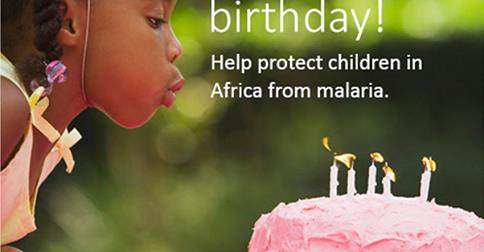
Malaria is still one of the leading killers of children in Africa, but Nothingbutnets is working hard to change that statistic. A simple $10 donation will send a net and save a life!! It’s not to late to help out, by purchasing a $15 ticket for our upcoming game on August 17th, $5 of your ticket price will go directly back to Nothingbutnets!! (please add link or information for the ticket package here) So come out this Friday night as we make a push for the play-offs and you will not only experience world class basketball but you will make a global difference doing it!!

No Kid Hungry Campaign

Most people have mental pictures of starving children in Africa when the issue of poverty and hunger are raised—you might be surprised to learn that there are actually more than 16 million American children who do not have reliable access to the nutritious food they need to lead healthy, active lives.  Recently I had the opportunity to represent the NBA/WNBA in Chicago at the Illinois No Kid Hungry Campaign launch.

There are two reasons why I am compelled to write about this issue.  First of all, I want our WNBA/NBA fans to know about this program and how they can either benefit from it or support it.  Secondly, I want families, especially the kids, to know that some of their favorite NBA/WNBA players know exactly how they feel.  We understand that it is not always easy to admit that you need help, and that as kids any time you are different whether it is your appearance or social-economic status, you are subject to being to being made fun of.  We want to encourage our youth to understand that nutrition is just as important to them as it is to us as professional athletes.  Getting enough healthy meals is essential for kids to be successful in school and in life.

As you have noticed over the years, I try to be authentic and transparent about my life’s journey, because sometimes people just need to know that they are not alone in their struggles.  This is an issue that hits close to home for me, because my family benefited from free and reduced lunch programs when I was growing up.  I shared with the students that my mom did everything she could to raise my brother, sister and I, often working two jobs while raising us on her own, but sometimes there just was not enough money to go around.  The free and reduced lunch program at my elementary school made sure that my siblings and I had a nutritious meal that my mom could not always afford herself.

Share Our Strength is a national nonprofit committed to ending childhood hunger in America by making sure that children in need are enrolled in federal programs, it invests in community organizations fighting hunger, teaches families how to cook healthy meals on a budget, and builds public-private partnerships to end hunger on a national and state level.  The NBA/WNBA are committed to working with Share Our Strength to connect more than 50,000 youth to free meals this summer across the United States. (http://www.nba.com/caravan/nokidhungry.html)

There was a common theme to the messages of all the speakers, and that was that there is not a shortage of food in America or a shortage of programs, but rather there is a shortage of access.  The focus is to increase participation in all federal child nutrition programs, to connect eligible children and families to all available assistance programs (only 39.3% of the students who receive free or reduced lunches are taking advantage of the free or reduced breakfast programs and only 14% participated in summer programs in Illinois), and to invest in innovative programming that strengthens communities’ infrastructure and systems to get healthy food to children and their families.  We want our kids to be strong, we want our kids to be smart, and we want our kids to be successful, so please find out how you can help end childhood hunger in your community!!